




Field Visits
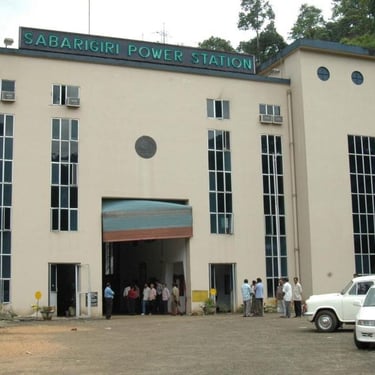
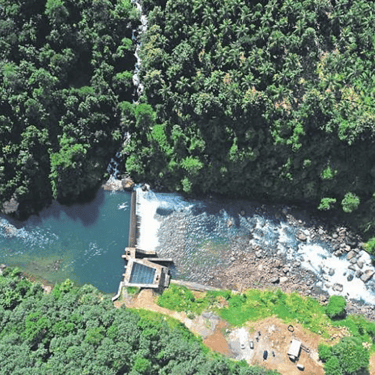
SABARIGIRI HYDRO ELECTRIC POWER PLANT
Moozhiyar, Pathanamthitta
Capacity - 4x55MW+2x60 MW=340 MW
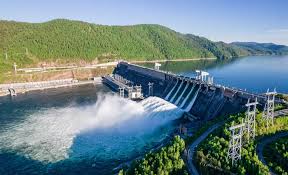
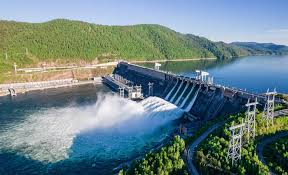
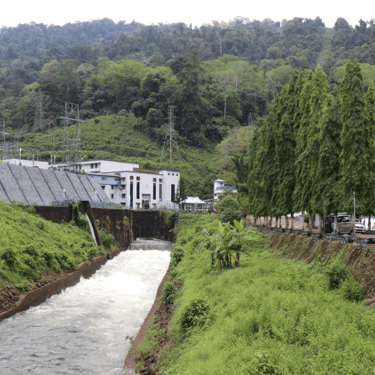
The Sabarigiri Hydro Electric Project is the second largest Hydro Electric Project of Kerala state.It is located in Pathanamthitta district of Kerala.This Indo-American project was commissioned on 28th August 1967 by His Excellency then President of India Sri.V.V.Giri. There are two main reservoirs under Sabarigiri HEP scheme namely Kakki and Pamba reservoir. Both these reservoirs are interconnected through underground tunnel. The Kakki reservoir consists of two dams namely, Kakki dam and Anathode dam. The Kakki dam is a concrete gravity dam on Kakki river. Anathode dam is a small dam located on a river which is a tributary of Kakki river. Small augmentation reservoirs viz Kullar-Gavi, Meenar I & Meenar II are serially connected to Pamba reservoir and also Upper Moozhiyar augmenting flow to Kakki reservoir.The power house of Sabarigiri HEP receives water from Kakki dam through a tunnel and discharges into Moozhiyar dam with an installed capacity of 340 MW.The power house consists of four generators of 55 MW and two generators of 60 MW.
The tail race water released from Sabarigiri power house is further utilised to generate hydropower at 5 different power Houses in the downstream side as given below:
1. Kakkad Power house
2. Ullumkal Power house
3. Karikkayam Power house
4. Carborandom HEP
5. Ranni-Perinad Power house.
Maniyar dam is located further downstream and is used for Pamba irrigation project.
The Power generated in Sabarigiri HEP is evacuated using six 220 kV feeders including interstate Sabarigiri-Theni feeder and one 66 kV feeder.
POTHENCODE 220KV SUBSTATION
Pothencode, Thiruvananthapuram
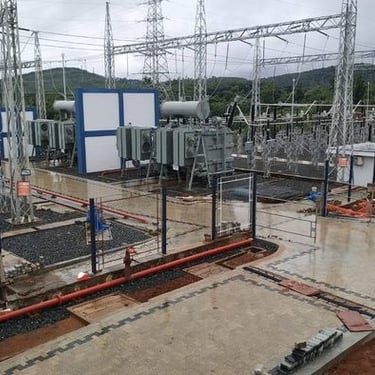
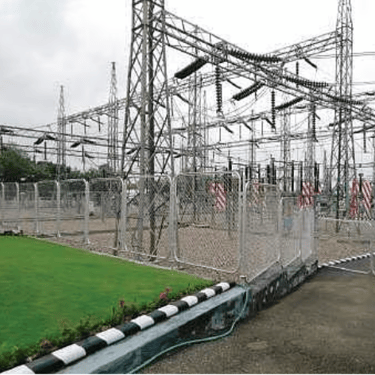
The Pothencode Substation is a major 220 kV extra-high-voltage (EHV) grid substation under Kerala State Electricity Board (KSEB) Limited, located at Pothencode in Thiruvananthapuram district. It serves as a key transmission hub in the southern Kerala power system, receiving bulk power from state and inter-state sources and distributing it to major load centres in and around Thiruvananthapuram. With multiple incoming and outgoing 220 kV feeders, high-capacity transformers, and modern protection and control systems, the substation plays a crucial role in ensuring grid stability, voltage regulation, and reliable electricity supply to urban, industrial, and IT infrastructure in the region.

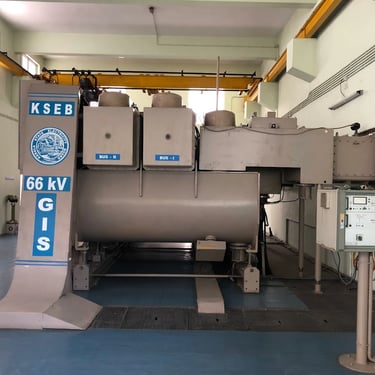
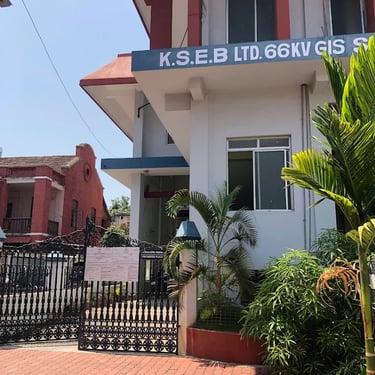
GIS POWER HOUSE SUBSTATION
Thiruvananthapuram
GIS (Gas Insulated Substation) is a type of electrical substation in which the major high-voltage components—such as circuit breakers, isolators, busbars, current transformers, and voltage transformers—are enclosed within sealed metal chambers filled with SF₆ (sulphur hexafluoride) gas. The SF₆ gas acts as an excellent insulating and arc-quenching medium, allowing the equipment to operate safely at high voltages within a very compact space.
Unlike conventional Air Insulated Substations (AIS), GIS requires much less land area, making it especially suitable for urban and space-constrained locations. Since the live parts are fully enclosed, GIS offers higher reliability, enhanced operational safety, and better protection against environmental factors such as dust, moisture, pollution, and salt-laden air. This results in reduced maintenance requirements and longer service life.
GIS substations are widely used in cities, underground installations, and indoor substations, where land availability and safety are critical concerns. With advanced protection systems, digital control panels, and SCADA integration, GIS plays a key role in modern power systems by ensuring reliable, efficient, and secure transmission and distribution of electrical energy.