
My Learnings from KSERC
I believe my internship experience was a transformative journey, offering a wealth of learning opportunities. From gaining academic knowledge on real-world scenarios to developing essential skills like communication, problem-solving, and time management, this experience will significantly shape my personal and professional growth. It is going to be a crucial step toward building a successful future in my chosen field.
I began my internship at the Kerala State Electricity Regulatory Commission (KSERC) on 6 January 2025. After an initial orientation period of two weeks, I was assigned to the Engineering Wing, where I worked under the guidance of Shri Sarmakumar (Consultant, Engineering Wing) and Mr. Arakesh Madhu (Junior Consultant, Engineering Wing).
During my internship at KSERC, I was exposed to a wide range of academic, technical, and practical experiences that significantly contributed to my professional development. One of the major learning outcomes was gaining a comprehensive understanding of the electricity regulatory process, particularly in relation to the drafting of the KSERC Renewable Energy Regulations, 2025. This exposure helped me understand how regulations are conceptualized, drafted, reviewed, and finalized, and highlighted the importance of stakeholder consultations and policy alignment in regulatory decision-making.
A key area of skill development during the internship was presentation and communication skills. I assisted in the preparation of presentations on regulatory and technical topics, which improved my ability to structure content logically, present data clearly, and communicate ideas effectively in a professional environment. I was also involved in preparing and delivering a presentation using a mind-mapping approach, which enabled me to visualize complex regulatory concepts, understand interlinkages between policy components, and present information in a concise and structured manner.
My reading and comprehension skills improved substantially through regular exposure to regulatory documents such as petitions, consultation papers, draft regulations, and Commission orders. This helped me develop the ability to critically analyze regulatory language and understand the intent and implications of policy decisions. Over time, I developed a disciplined habit of daily reading, which enhanced both my reading speed and analytical capabilities.
In addition to regulatory and analytical work, I enhanced my creative and technical skills by developing a personal website to document and present my work and learning experiences. This initiative helped me understand digital presentation of information and create a structured public-domain repository of my professional work.
Attending public hearings was another important component of my internship. These hearings provided insights into stakeholder participation, regulatory scrutiny of submissions, and the transparent and consultative nature of the decision-making process.
The internship also provided valuable field exposure through visits to the Sabarigiri Hydroelectric Project, Pothencode Substation, and GIS Power House Substation. These visits helped bridge the gap between theoretical understanding and practical implementation by offering firsthand exposure to power generation, transmission, and substation operations.
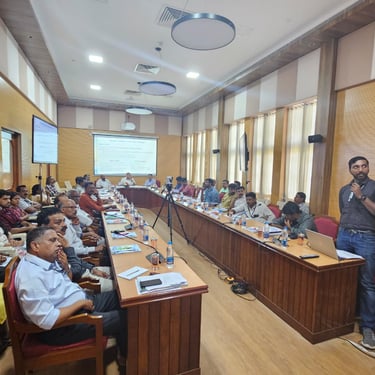
As part of my learning experience, I attended a one-day workshop titled “Demystifying Carbon Credits: Opportunities for Stakeholders in Kerala”, organized by the Energy Management Centre (EMC), Government of Kerala. The workshop provided insights into carbon markets, carbon credit mechanisms, regulatory frameworks, and opportunities for stakeholders in the context of Kerala’s energy transition and climate commitments. This exposure helped me understand the emerging role of carbon finance and market-based mechanisms in the power and renewable energy sector.
I also had the opportunity to interact with experts from various fields, including officials from KSEB Limited and other sector professionals. These interactions included sessions and discussions on power exchanges such as the Indian Energy Exchange (IEX), National Market-based mechanisms (NAM-E), and the evolving concept of the Digital Energy Grid. These expert interactions enhanced my understanding of market operations, grid modernization, and the integration of digital technologies in the power sector.
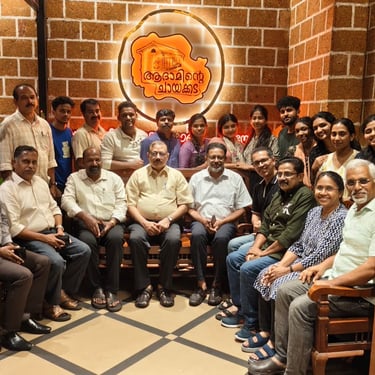
One of the most enriching aspects of my internship was the opportunity to work under experienced professionals and senior experts. The guidance and mentorship of Chairman Shri T. K. Jose had a profound influence on my personal and professional development. His emphasis on reading, clarity of thought, structured presentation, and analytical reasoning was deeply inspiring. The time and effort he devoted to mentoring interns provided invaluable learning beyond technical knowledge.
I am also deeply grateful for the guidance and support extended by Shri Pradeep B (Member – Technical), Shri Sarmakumar (Consultant, Engineering), Shri Mohanakumar (Consultant, Technical), and Shri Sivaprasad (Consultant, Technical), whose insights helped me understand the analytical reasoning and practical considerations underlying regulatory implementation. Their mentorship significantly strengthened my understanding of the power sector and regulatory mechanisms. I also express my sincere thanks to Mr. Arakesh Madhu (Junior Consultant, Engineering Wing) for his immense support and guidance throughout the internship.
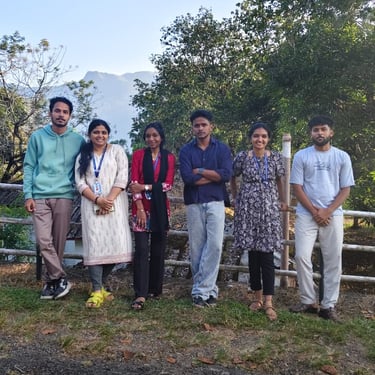
I would like to express my sincere thanks to all Consultants, Junior Consultants, colleagues, and staff members at KSERC for their continuous support and guidance throughout my internship.
Overall, the internship provided a well-balanced blend of theoretical understanding, regulatory exposure, and practical learning. The knowledge and skills gained during this period have significantly strengthened my interest and preparedness for a career in the power and regulatory sector.